Leave Your Message
- Phone
- E-mail
- Whatsapp
- WeChat

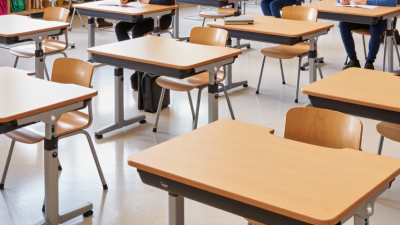
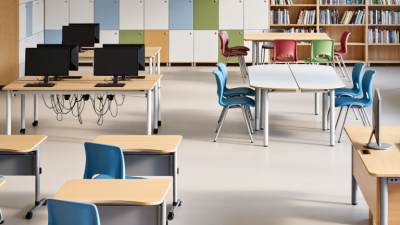
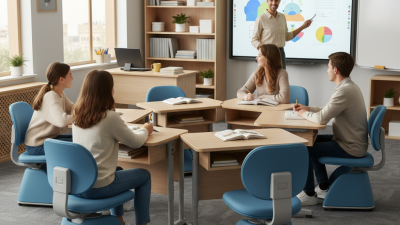
Picking School Table Chairs in 2026 isn't just about comparing prices or going by pretty photos. If you're buying globally, you've got to think about age groups, body sizes in different regions, room layouts, shipping conditions, and how the chairs get cleaned every day. A chair that feels great in one market can feel all wrong in another.
Real-world experience helps here. Before you order samples, measure seat height, desk clearance, backrest support, and usable floor space. Check if edges are smooth, joints stay solid, and protective feet keep noise down on hard floors. And try a few units in an actual classroom. See how students sit, move around, and stash their stuff.
The small stuff adds up.
Professional buyers should ask for material specs, load-test info, production records, and warranty terms that are actually clear. Suppliers ought to explain how their School Table Chairs are made, inspected, packed, and replaced when something goes wrong. Safety expectations can vary from country to country, so verify current rules with local experts. Don't just trust a certificate image—check its scope, who issued it, and whether it's still valid.
A smart decision also looks at total ownership cost. Cheap chairs might need repairs sooner, while sturdier designs can ease replacement pressure. That said, durability shouldn't be an excuse for furniture that's heavy and uncomfortable. That trade-off deserves an honest look. A full procurement plan might include samples, factory chats, delivery checks, and feedback from teachers. No checklist is perfect, of course. Careful observation still catches things documents won't.
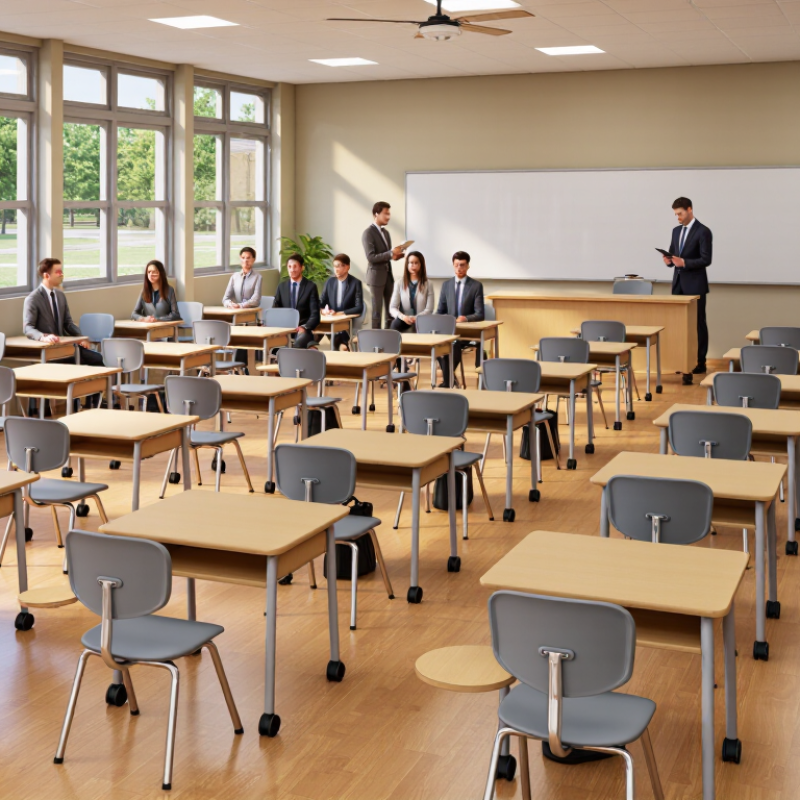
Choosing school table chairs starts with learning needs, not appearance. Global buyers should identify whether students read, write, build, discuss, or use digital devices. Each activity requires different support. Quiet reading may need stable tables and upright chairs. Group projects need movable furniture and rounded edges. Younger children often need lower seat heights, lighter frames, and easier movement.
Age groups also shape safe dimensions. Measure student height, knee space, and desk clearance before selecting a standard size. Adjustable furniture can serve mixed-age classrooms, but its mechanisms must be simple and secure. For China School Table Chairs, buyers should request dimensional drawings, material details, and test reports from suppliers. Check surfaces closely. Sharp corners, weak welds, and slippery feet can create daily problems.
Classroom activities deserve practical trials. Place sample units in a real room, then observe posture, noise, movement, and storage. A chair that feels comfortable for ten minutes may disappoint after a full lesson. We have seen attractive layouts restrict teacher movement. That matters. Buyers should also consider cleaning routines, replacement parts, shipping protection, and local safety requirements. Some decisions remain uncertain. A fixed chair may cost less, yet changing teaching methods can make it unsuitable later. Ask teachers to test the furniture with actual lesson plans, not empty classrooms.
| Learner Age Group | Typical User Height | Recommended Seat Height | Recommended Table Height | Primary Learning Activities | Recommended Chair Requirements | Recommended Table Requirements | Selection Priority for Global Buyers |
|---|---|---|---|---|---|---|---|
| 3–5 years Early childhood | Approximately 95–115 cm | 260–300 mm | 460–530 mm | Drawing, block play, storytelling, puzzles, group craft work, and sensory activities | Rounded edges, stable four-leg base, easy-clean surface, lightweight construction, and foot support that allows both feet to rest securely | Rounded corners, non-toxic durable finish, wipe-clean top, low visual obstruction, and sufficient space for small-group activities | Safety, stability, cleanability, low weight, and compliance with applicable local product-safety requirements |
| 5–7 years Early primary | Approximately 110–125 cm | 300–340 mm | 520–590 mm | Handwriting, reading, mathematics, collaborative projects, art, and introductory digital learning | Supportive backrest, smooth seat edge, easy repositioning, robust frame, and seat depth that does not press behind the knees | Adequate writing area, rounded front edge, low-glare surface, cable-free design, and optional linking or grouping capability | Correct fit, durability under daily movement, simple maintenance, and efficient classroom storage |
| 7–9 years Primary | Approximately 120–140 cm | 340–380 mm | 590–640 mm | Extended writing, textbook work, science demonstrations, group discussion, and computer-based assignments | Moderate back support, ventilated back panel, impact-resistant materials, non-marking feet, and optional height adjustability | Firm, level work surface, adequate knee clearance, rounded corners, and layouts that support both individual and paired work | Ergonomic fit, resistance to frequent rearrangement, repairability, and compatibility with the available classroom floor area |
| 9–12 years Upper primary | Approximately 130–155 cm | 380–420 mm | 640–700 mm | Independent study, project-based learning, laboratory preparation, group presentations, and extended keyboard use | Contoured backrest, stable seat, smooth edges, optional adjustable seat height, and sufficient load capacity for growing users | Scratch-resistant top, generous personal workspace, manageable weight, optional trapezoid or rectangular configurations, and accessible storage | Long-term durability, flexible layouts, ergonomic adjustability, and total cost of ownership |
| 12–15 years Lower secondary | Approximately 145–175 cm | 420–460 mm | 700–760 mm | Subject-specific lessons, laboratory work, collaborative problem-solving, examinations, and digital learning | Adult-proportioned seat, supportive backrest, strong frame, easy-clean materials, and adjustable options where the student height range is wide | Stable writing surface, adequate elbow and leg clearance, optional technology management, and resistance to heavy daily use | Mixed-height accommodation, robust construction, safe movement, and suitability for multiple teaching formats |
| 15–18 years Upper secondary | Approximately 160–190 cm | 440–480 mm | 720–780 mm | Examinations, lectures, research, advanced laboratory activities, presentations, and extended computer work | Adult-size proportions, durable ergonomic back support, stable base, replaceable glides, and optional height-adjustable models | Large work surface, strong load-bearing structure, low-reflective finish, sufficient device space, and easy access for cleaning | Ergonomics during prolonged sitting, lifecycle value, maintainability, and compatibility with examination-room layouts |
| Mixed-age classrooms Different year groups | Determine the actual 5th–95th percentile user-height range for the school population | Use two or more size categories, or select certified adjustable seating | Use matched table sizes, adjustable tables, or modular furniture systems | Flexible grouping, independent work, practical activities, presentations, and shared technology | Clearly identified size codes, safe adjustment mechanisms, stable feet, and easy movement without excessive weight | Modular shapes, nesting or stacking capability, adjustable height, durable edge protection, and efficient storage | Anthropometric fit, procurement flexibility, spare-part availability, shipping efficiency, and local standards compliance |
Dimension guide: Measurements are practical starting ranges in millimetres and should be validated against the target students’ anthropometric data, applicable national standards, classroom layout, and the supplier’s tested product specifications.
Start with classroom tasks, not appearance. Reading needs stable tables and upright support. Group projects need movable furniture and rounded edges. Digital work may need clear desk space and relaxed wrists.
Measure student height, knee space, and desk clearance before selecting sizes. Younger children often need lower seats and lighter frames. Adjustable furniture can support mixed ages, but controls must be simple and secure.
Check seat height, seat depth, backrest angle, and desk clearance. Students should place both feet flat on the floor. Knees should stay near a right angle. Shoulders should remain relaxed while writing.
Look for rounded edges, stable frames, non-slip feet, and protected pinch points. Ask for load testing and surface durability records. Weak welds or slippery feet can create repeated problems. Details matter.
Put sample chairs and tables inside a real classroom. Observe posture, noise, movement, storage, and teacher access. A chair comfortable for ten minutes may fail during a full lesson. Test it live.
Leave clear routes for mobility devices. Provide tables with wheelchair-friendly knee space. Consider left-handed students, sensory-sensitive children, and students needing extra movement. Accessibility works best when planned from the start.
Request dimensional drawings, material details, test reports, and quality documentation. Also check replacement parts, cleaning needs, shipping protection, and local safety requirements. Catalog images can hide uncomfortable details.
Not always. Adjustable models can support several age groups and reduce replacement needs. However, complicated mechanisms may confuse teachers or fail sooner. A cheaper fixed chair may become unsuitable when teaching methods change. Some decisions remain uncertain.
Choosing the right School Table Chairs begins with understanding how students learn and how classrooms are used. Global buyers should consider age groups, teaching methods, group activities, individual study, and flexible classroom layouts. Table and chair dimensions should support student growth, proper posture, and comfortable movement. Buyers should also compare materials, frame construction, weight capacity, surface finishes, and long-term durability to ensure reliable daily performance.
Ergonomics and safety are equally important, including stable structures, smooth edges, suitable seat heights, and accessibility for diverse learners. Practical evaluation should cover cleaning, maintenance, stacking, storage, and efficient use of limited classroom space. Before purchasing, verify applicable standards, product certifications, packaging quality, shipping arrangements, and supplier support. A careful selection process helps schools create safe, comfortable, adaptable, and cost-effective learning environments.