Leave Your Message
0%

Alright, so when it comes to picking the right training tables and chairs for 2026, it's honestly more than just browsing catalog photos and comparing price tags. I mean, if you're a global buyer, you need stuff that's actually reliable—whether it's for classrooms, conference rooms, corporate academies, or those flexible training spaces that seem to be everywhere now. And a good set? Well, it should handle everything: good posture support, easy movement, quick rearrangement when you need to switch things up, and it should keep you comfortable even during those marathon working sessions.

So you're thinking about buying furniture from overseas, huh? It can be a great move, but there's a lot to consider beyond just the price tag. Let's break it down – we're talking tabletops, frame sturdiness, how smoothly the folding works, caster quality, chair comfort, packaging, and what you'll need to watch for down the road in terms of maintenance. And here's a classic trap: that table in the product photos looks absolutely gorgeous online, but after you fold and unfold it a few dozen times, it starts to feel like it's going to collapse on you. Yeah, that's a real thing, and it matters way more than you'd think. So before you place a big order, make sure you ask for the nitty-gritty details – load capacity, exact dimensions, finish samples, test reports, and a clear warranty policy. Don't just take their word for it; get it in writing!

Room planning is just as important as picking the furniture itself. You know what's a lifesaver? Nesting tables – they really open up those aisles when you need to squeeze more people in. And if you're constantly shifting layouts, flip-top models are a godsend because you can reconfigure in no time. Stackable chairs are great for storage, but honestly, comfort varies a lot. It depends on the seat depth, back support, and even ventilation – some are just cheap plastic boxes. Also, watch out for small wheels; they can leave ugly marks on delicate floors. And packaging is another thing – thick packaging protects the chairs, sure, but then you're paying more for shipping and it takes up way more space. It's a real trade-off.

Look, when it comes to finding reliable suppliers, they really need to stay in touch and have quality checks you can actually trace. It's a good idea to get independent inspections to look at stuff like dimensions, welds, surface finishes, and how well the cartons protect the goods. One thing I've learned is that standards aren't the same everywhere – each market has its own rules, so you've got to double-check the safety and environmental stuff locally. And honestly, no matter how many recommendations you read, they're never perfect because things like climate, shipping routes, and how people actually use the product all vary. So what really matters is getting your own measurements of the room and hearing from real users who deal with it daily.

So, if you're a global buyer trying to figure out which training tables and chairs are worth your money in 2026, this overview is your best friend. It’s packed with practical evidence that’ll boost your confidence and keep you from getting burned by unexpected costs.
2026 Top Training Tables and Chairs for Global Buyers

What Are Training Tables and Chairs?

2026 Top Training Tables and Chairs for Global Buyers

What Are Training Tables and Chairs?

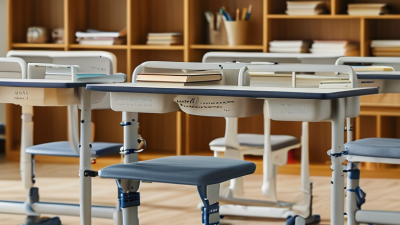
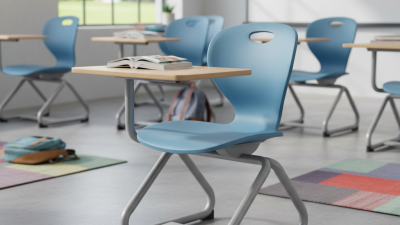
Training tables and chairs are movable furniture designed for learning, workshops, seminars, and temporary workstations. Unlike fixed Classroom Furniture, they can be rearranged as activities change. A table may include folding legs, nesting panels, or lockable casters. A chair often stacks or nests to save storage space. This flexibility suits rooms with several purposes.

For global buyers, the product is more than a tabletop and seat. Check table height, usable depth, edge comfort, frame stability, and chair load capacity. Request measured dimensions, material details, packaging photos, and test documentation. Rounded edges reduce sharp contact points. Locking casters prevent unwanted movement during group work. Flip-top designs can shorten room-change time, but their hinges need regular inspection. Small details matter.

Use depends on people, not catalog images. A narrow table may suit laptops but leave little space for printed materials. A padded chair feels comfortable, yet fabric may need extra cleaning in busy rooms. I would also question extremely light furniture; easy handling can reduce stability. Not always. A practical trial with real users can expose problems before a large international order. Test it. Waste, storage limits, and local safety requirements also deserve careful review.

Key Features of High-Quality Training Furniture

For global buyers in 2026, high-quality Training Room Tables And Chairs should support movement, focus, and repeated daily use. Start with a stable frame, durable surfaces, and smooth adjustment points. Check the underside carefully. Sharp edges, exposed screws, and weak joints often appear there. Quiet casters matter. During a real trial, chairs should roll without scraping, while tables remain steady during note-taking. A showroom photograph cannot reveal that.

Good training furniture also respects the human body. Choose chairs with shaped back support, breathable surfaces, and seat heights suited to intended users. Tables need enough knee clearance for different body types and comfortable spacing between learners. For computer sessions, cable channels should prevent loose wires from crossing walking paths. Small details matter. Rounded edges reduce harsh contact, especially in crowded rooms.

Durability is more than thick metal or attractive finishes. Look for replaceable glides, scratch-resistant laminates, reinforced hinges, and washable upholstery. Ask suppliers for material specifications, weight limits, cleaning guidance, warranty terms, and independent test documents. Requirements differ between regions, so local compliance should be verified before purchase. Procurement teams should compare physical samples under realistic conditions. I would not trust a low price without checking stability and repair access. Still, even careful buyers can overlook acoustics, storage, or awkward folding mechanisms. That weakness deserves another review before approval.

Types of Training Tables and Chairs for Different Settings

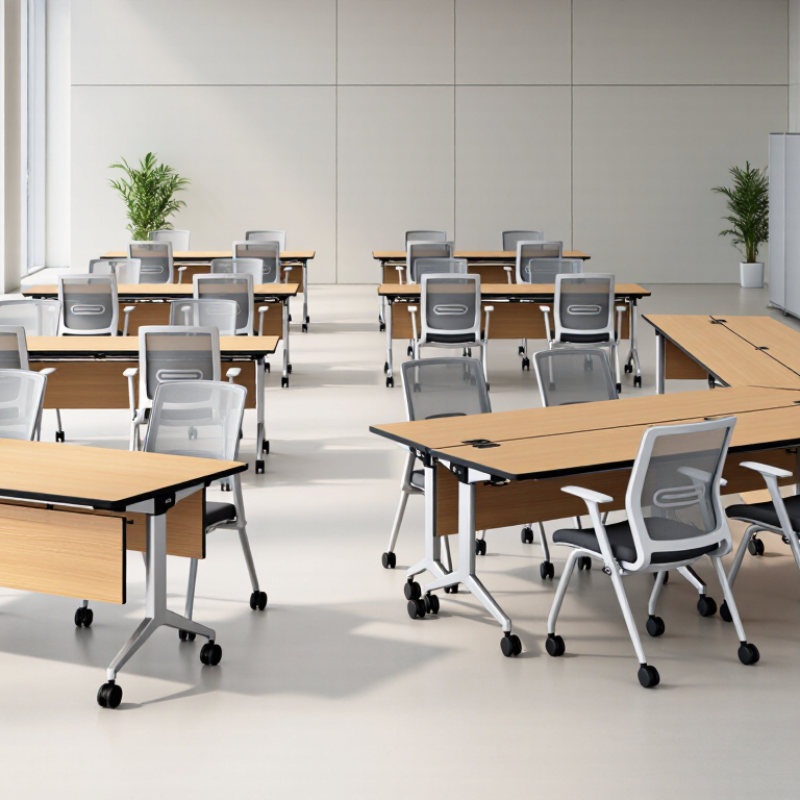
Training tables and chairs should match the learning task, not merely fill a room. Classroom-style tables support presentations and note-taking, while narrow rectangular tables create clear sightlines. U-shaped layouts work well for discussion and coaching. Nesting tables suit rooms that change from lectures to group work. China Training Tables And Chairs can serve international projects when buyers verify dimensions, load ratings, finish quality, and packaging standards.

Collaborative training needs mobile tables, lightweight chairs, and generous aisle space. A 2024 LinkedIn Workplace Learning Report found that 89% of learning professionals believe proactive skills development helps prepare organizations for change. That finding supports adaptable rooms, but furniture alone cannot create effective learning. Microsoft’s 2023 Work Trend Index reported that 73% of employees wanted flexible work options. Hybrid rooms therefore need height-adjustable screens, cable access, and chairs comfortable for longer sessions. Fixed furniture may look orderly. It can also restrict movement.

Tips: Measure the room with occupied chairs, not empty floor space. Keep walking routes near 36 inches where possible. Test casters on carpet and hard flooring. Choose wipe-clean surfaces for shared classrooms. Ask suppliers for test reports, fire-performance documents, and replacement-part availability. A bright white tabletop may photograph well, yet glare can frustrate learners. I have seen layouts designed for twelve people feel cramped with laptops open. Recheck the plan with real equipment before ordering.

How to Choose the Right Training Furniture

Choosing the right training furniture starts with the room, not the catalogue. Measure aisle widths, screen angles, door swings, and storage space. Custom Training Tables And Chairs should support quick reconfiguration without heavy lifting. Tables with lockable casters help trainers shift from rows to small groups. Chairs need stable frames, breathable backs, and enough seat depth for different users. Test a sample for two hours. Five minutes is not enough.

Ergonomics deserves measurable attention. The World Health Organization and International Labour Organization estimated 1.9 million work-related deaths globally in 2016, with long working hours among major risks. Training furniture cannot solve every workplace hazard, but it can reduce avoidable discomfort. Select table heights that keep forearms near level. Leave clear knee space beneath each surface. A 2024 Global Wellness Institute report valued the wellness economy at 6.3 trillion dollars in 2023. Comfort is now an operational concern, not decoration.

Durability and end-of-life planning also matter. The U.S. Environmental Protection Agency reported about 12.1 million tons of furniture and furnishings entered the municipal waste stream in 2018. Choose replaceable glides, repairable mechanisms, and recyclable materials where possible. Ask suppliers for load ratings, cleaning guidance, and test documentation. A polished showroom can hide weak joints. I still see buyers overvalue appearance and undervalue maintenance access. That mistake becomes expensive after repeated daily use.

Materials, Safety Standards, and Ergonomic Design

For global buyers, Wholesale Training Tables And Chairs should be judged beyond appearance. Materials affect durability, cleaning, and user comfort. Powder-coated steel frames resist daily impacts and frequent movement. High-pressure laminate surfaces handle writing, spills, and repeated disinfection. Rounded edges reduce injury risks in crowded classrooms. Low-emission panels also support healthier indoor environments.

Safety documentation deserves close attention. Ask suppliers for test reports, material declarations, load ratings, and stability results. Standards differ by market, so confirm the required requirements before placing a large order. Relevant references may include EN 1729 for educational furniture or applicable ASTM standards. Certificates alone are not enough. Check whether they match the exact model, dimensions, and production batch.

Ergonomic design requires practical observation. A chair should support the lower back without restricting movement. Seat height must match the table height and the users’ age range. Adjustable features can help, but complicated mechanisms may increase maintenance. Test a sample for several hours. Notice pressure behind the knees, unstable feet, and awkward writing angles. Small casters may roll too easily on smooth floors. This is often overlooked. A perfect specification does not guarantee a comfortable learning space, and buyer feedback may reveal weaknesses that laboratory testing misses.

2026 Top Training Tables and Chairs for Global Buyers — Materials, Safety Standards, and Ergonomic Design
Training Furniture Type Typical Dimensions Recommended Materials Safety and Compliance References Ergonomic Design Features Typical Procurement Load Target Best-Fit Training Environment
Folding Training Table 1,200–1,800 mm long
450–600 mm deep
720–750 mm high
Powder-coated steel frame;
18–25 mm laminated wood-based top;
impact-resistant edge banding
EN 15372 Non-domestic tables: strength, durability and safety
ANSI/BIFMA X5.5 Desk and table performance reference
Rounded corners, stable locking legs, adequate knee clearance, and a folding mechanism with an anti-pinch design. 100–150 kg evenly distributed tabletop load, subject to validated testing and the supplier’s specification. Multi-purpose classrooms, conference rooms, temporary layouts, and rooms requiring frequent storage.
Nesting Training Table 1,200–1,600 mm long
450–600 mm deep
720–750 mm high
Steel or aluminum base;
high-pressure laminate or melamine surface;
replaceable polypropylene bumpers
EN 15372 Table strength and durability testing
EN 14703 Linking devices for non-domestic seating and tables, where applicable
Lockable casters, controlled nesting clearance, rounded front edge, and sufficient legroom when tables are linked. 100–150 kg evenly distributed tabletop load; caster and frame capacity should be tested separately. Training centers, universities, agile learning spaces, and rooms that change from rows to pods.
Flip-Top Mobile Table 1,200–1,800 mm long
600–750 mm deep
720–750 mm high
Steel frame with protective powder coating;
laminate or compact laminate top;
polyurethane or thermoplastic caster wheels
EN 15372 Non-domestic table safety and durability
ANSI/BIFMA X5.5 Desk and table performance reference
Dual-wheel lockable casters, secure flip mechanism, anti-tip geometry, and clearance for seated users. 100–150 kg evenly distributed tabletop load; mobile stability should be verified in both locked and unlocked conditions. Corporate training rooms, examination areas, workshops, and flexible classrooms.
Height-Adjustable Training Table 1,200–1,600 mm long
600–800 mm deep
Approximately 680–1,100 mm high
Powder-coated steel or aluminum column;
durable laminate top;
sealed control components
EN 527-1 Dimensions and measurement requirements for work tables
EN 527-2 Safety, strength and durability requirements
Seated-to-standing adjustment, rounded edges, anti-collision protection, stable base, and cable-management provision. 80–120 kg evenly distributed tabletop load, depending on the lifting system and configuration. Long-duration instruction, inclusive learning spaces, hybrid training, and shared workstations.
Stackable Four-Leg Training Chair Seat height commonly 430–480 mm
Seat width commonly 400–500 mm
Overall height commonly 780–900 mm
Tubular steel or aluminum frame;
polypropylene or plywood shell;
optional replaceable upholstered pad
EN 16139 Strength, durability and safety for non-domestic seating
EN 1729-2 Educational seating safety and test methods, where applicable
Contoured backrest, waterfall seat edge, non-slip glides, adequate lumbar support, and safe stacking geometry. 110–120 kg minimum user-load target is commonly specified for institutional procurement; verify the tested rating. Classrooms, lecture rooms, examination halls, and spaces needing compact storage.
Tablet-Arm Training Chair Seat height commonly 430–480 mm
Writing surface approximately 450–600 mm wide
Writing surface height commonly 680–750 mm
Reinforced steel frame;
molded polypropylene shell;
laminated tablet surface with rounded edges
EN 16139 Non-domestic seating strength and durability
EN 1729-2 Educational seating safety, where applicable
Left- and right-hand configurations, adequate elbow support, stable writing tablet, rounded tablet corners, and unobstructed exit path. 110–120 kg minimum user-load target plus a separately specified tablet-arm load, commonly 15–25 kg. Lecture theaters, compact classrooms, certification courses, and rooms without individual tables.
Training Chair with Casters Seat height commonly 430–500 mm
Seat width commonly 430–520 mm
Overall height commonly 780–950 mm
Five-leg or four-leg steel base;
polypropylene shell or molded foam;
polyurethane casters suitable for the floor finish
EN 16139 Non-domestic seating performance
ANSI/BIFMA X5.1 General-purpose office chair reference when the chair includes office-chair mechanisms
Appropriate seat pitch, backrest flex, controlled caster movement, stable base, and optional linking devices. 110–135 kg tested user-load range is commonly requested; confirm the exact model rating and test method. Collaborative training, computer-based instruction, seminar rooms, and frequent seat repositioning.
Adjustable Educational Chair Seat-height ranges commonly covering 380–460 mm or 430–510 mm
Size selection should correspond to user stature
Powder-coated steel frame;
molded polypropylene or plywood seat and back;
replaceable floor glides
EN 1729-1 Functional sizes for educational furniture
EN 1729-2 Safety requirements and test methods
Adjustable seat height, supportive backrest, stable five-point or four-leg base, foot clearance, and size marking. 100–120 kg tested user-load target, depending on the intended age group and chair size. Schools, vocational training, children’s learning areas, and mixed-height user groups.
Buyer reference: Dimensions and load figures are typical procurement ranges, not a certification claim for any specific product. Buyers should request current test reports, material declarations, chemical compliance documentation, local fire-performance evidence for upholstered components, and country-specific conformity information before purchase.

Global Buying Factors: Customization, Shipping, and Cost

For global buyers, training tables and chairs must fit real classrooms, not only catalog images. Customization may include table height, folding legs, chair colors, writing tablets, cable ports, and nesting capacity. A practical supplier should provide technical drawings, material samples, load data, and a pre-production sample. Confirm edge finishing and surface durability before approving bulk production. Small details matter.

Measure twice.

Shipping decisions can change the purchase result. Flat-pack tables often reduce container volume, but assembly time may increase at the destination. Protective corner guards, moisture barriers, and strong carton labels help prevent damage during long transit. Buyers should verify carton dimensions, gross weight, pallet rules, and delivery terms before placing orders. Port congestion and seasonal freight changes can affect schedules, so a realistic buffer is necessary. Do not rely on one optimistic shipping estimate.

Landed cost is more useful than factory price. Include tooling, samples, packaging, freight, import duties, local delivery, assembly, spare parts, and possible inspection fees. A lower-priced chair may require earlier replacement or more maintenance. Ask for consistent material specifications and recent quality records. Independent testing can support claims about strength, stability, fire performance, or emissions, depending on the destination market. Currency changes also deserve attention. Cost forecasts are never perfect. That weakness should be discussed openly, not hidden behind a clean quotation.

2026 Top Training Tables and Chairs for Global Buyers

Global buying factors: customization, shipping, and cost

The chart compares practical planning ranges used by international buyers: customization may add approximately 15–30 days, ocean shipping commonly requires about 25–45 days, and product cost typically represents the largest part of the purchasing budget. Actual results vary by order volume, destination, production schedule, and shipping route.

FAQS

What are training tables and chairs used for?

They support lessons, workshops, seminars, and temporary workstations. Their movable design suits rooms with changing layouts.

How can buyers save storage space?

Choose stackable chairs and nesting or flip-top tables. These designs can clear a room quickly. Storage measurements still matter.

What should buyers check before ordering tables?

Check height, usable depth, knee clearance, edge comfort, and frame stability. A narrow tabletop may fit a laptop but not printed materials.

Why are locking casters important?

Locking casters prevent unwanted movement during group work. Test them on the actual floor. Some wheels may scrape or roll unevenly.

What makes a training chair comfortable?

Look for shaped back support, breathable surfaces, and suitable seat height. Padded fabric feels pleasant but may require frequent cleaning.

How can buyers evaluate furniture durability?

Inspect joints, hinges, screws, glides, and surface finishes. Request weight limits, cleaning guidance, and repair information. Thick metal alone proves little.

What should global buyers request from suppliers?

Request measured drawings, material specifications, samples, packaging photos, load data, and test documents. Physical samples reveal problems catalog images hide.

How can shipping affect the final purchase cost?

Flat-pack furniture may reduce container volume but increase assembly work. Include packaging, freight, local delivery, duties, inspection, and spare parts.

What packaging details help prevent transit damage?

Protective corner guards, moisture barriers, and clear carton labels help. Confirm carton dimensions, gross weight, and pallet requirements before shipment.

How should buyers compare total cost?

Compare landed cost, not factory price alone. Include maintenance and replacement risk. A low price can become expensive later.

Conclusion

Training Tables And Chairs are essential furnishings for classrooms, meeting rooms, workshops, conference spaces, and flexible learning environments. Designed for group instruction and collaborative activities, they typically combine practical layouts, easy mobility, and efficient use of space. High-quality training furniture should provide strong construction, stable frames, comfortable seating, smooth surfaces, and convenient features such as folding mechanisms, nesting capability, casters, or integrated cable management. Different settings may require rectangular, trapezoidal, flip-top, adjustable-height, or modular tables paired with stackable, upholstered, or ergonomic chairs.

Choosing the right furniture requires evaluating room size, user capacity, layout flexibility, storage needs, and frequency of use. Buyers should also consider durable, easy-to-clean materials, rounded edges, reliable hardware, fire and safety requirements, and ergonomic support for extended sessions. For global purchasing, customization options, packaging, shipping methods, lead times, import documentation, warranty support, and total cost are equally important. A careful comparison of quality, safety, functionality, and long-term value can help organizations select training furniture that performs reliably across diverse environments.
Sebastian

Sebastian

Sebastian is a dedicated marketing professional at Guangzhou Gaudi School Furniture Manufacturing Co., Ltd., where he leverages his extensive expertise in the industry to drive the company's growth. With a profound understanding of school furniture products, Sebastian plays a pivotal role in......
Previous 2026 How to Choose Elementary Student Desks for Schools?