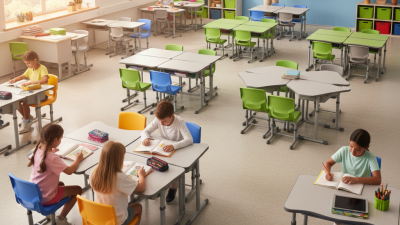
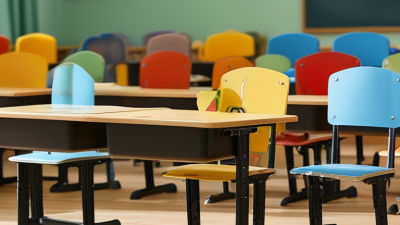
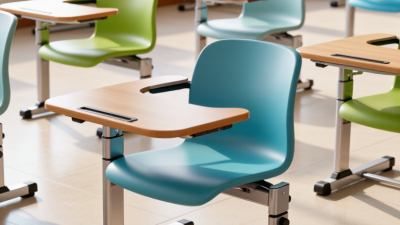
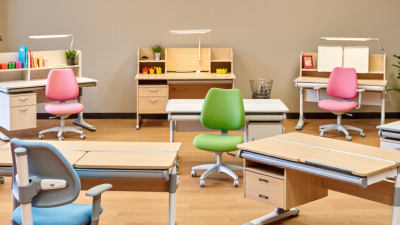
Elementary School Chairs really do shape how kids sit, move, focus, and join in during the school day. And in classrooms around the world, they have to work for all sorts of body sizes, teaching styles, climates, and floor conditions. A good chair helps a child hold a steady posture without making them feel stuck. It can also cut down on disruptions during group work, reading time, and hands-on activities.
The little stuff matters.
Seat height, back support, edge design, and weight all affect how usable a chair is day to day. Rounded edges? They can make movement safer. Tough surfaces? Easier to wipe down in a busy classroom. Lightweight chairs can help teachers rearrange the room, but if they're too light, they might feel wobbly. So yeah, it's a balance, and it takes some careful looking.
Picking Elementary School Chairs shouldn't come down to looks or price alone. Teachers, facility managers, and purchasing teams should think about ergonomic fit, how long the materials last, maintenance, and whatever regional safety rules apply. Testing samples with real students can uncover issues that product photos never show. A chair might look comfy, but after thirty minutes it could feel cramped. That's where hands-on experience really earns its keep.
Schools worldwide also deal with different budgets and infrastructure. Some need stackable chairs for flexible rooms. Others need sturdier materials because chairs get moved a lot or the air is humid. Manufacturers and suppliers should give clear specs, test info, and dependable after-sales support. And their claims should be backed by evidence that's easy to check.
No chair fixes every classroom problem. The perfect choice? Pretty rare. Schools might need to rethink assumptions about color, size, or fixed seating. A thoughtful selection process can create learning spaces that are safer, more adaptable, and better tuned to what kids actually experience every day.
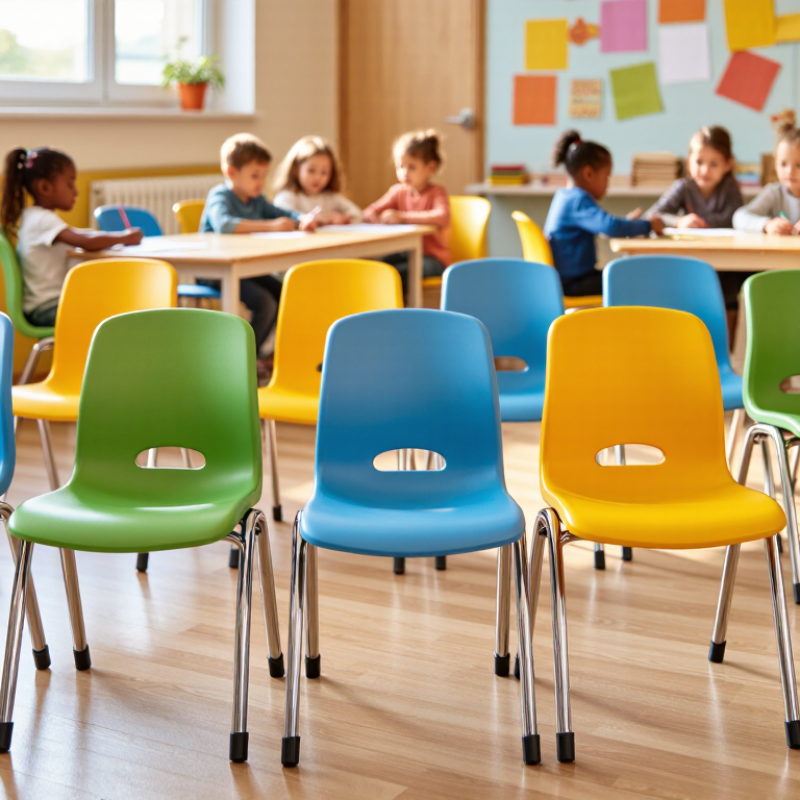
Elementary school chairs are purpose-built seats for children’s height, posture, movement, and classroom routines. They support writing, reading, group work, and safe movement between desks. Unlike adult seating, their proportions must match growing bodies. The fit matters.
In practical classroom planning, a suitable chair keeps both feet near the floor and supports an upright, relaxed posture. European standard EN 1729-1 classifies School Furniture by pupil height and seat dimensions. Its chair sizes range from roughly 310 to 460 millimeters in seat height. These measurements offer a useful reference, not a universal answer. Children in one class may differ greatly in height.
The role becomes more complex across global classrooms. OECD’s Education at a Glance 2023 reports an average primary class size of about 21 students across OECD countries. Space, teaching style, and furniture storage therefore affect daily use. A chair should stack safely, resist repeated movement, and remain comfortable during long lessons. China Elementary School Chairs may serve local classrooms well when their dimensions reflect children’s measurements and regional teaching practices.
UNESCO’s 2023 Global Education Monitoring Report highlights continuing inequality in learning environments. Furniture alone cannot solve that problem. Still, a stable seat can reduce distraction, improve access, and support participation. A common mistake is treating durability as the only priority. Comfort, repairability, and inclusive fit deserve equal attention. Some choices will need revision.
Elementary school chairs should support movement, focus, and safe daily learning. In classroom observations, children often shift position while reading, drawing, or working with partners. A chair with the correct seat height lets both feet rest firmly on the floor. This improves balance and reduces pressure behind the knees. A supportive backrest should follow the child’s posture without forcing a stiff sitting position.
Keep it practical. Rounded edges help reduce bumps during busy transitions. Strong joints matter because chairs face repeated lifting, dragging, and stacking. Smooth, non-porous surfaces also make cleaning easier after paint, snacks, or muddy outdoor play. In warmer regions, breathable materials can reduce discomfort. In colder classrooms, surfaces should not feel harsh or brittle. These details are easy to overlook.
Size flexibility is important. Children in one class may differ greatly in height, age, and physical ability. Adjustable or carefully graded chair sizes can serve learners more fairly. Lightweight construction helps children move chairs independently, but excessive lightness may reduce stability. That balance needs testing. I have seen attractive chairs fail when their feet slide on polished floors. Designers should test them with real classroom routines, not only in a showroom. A good chair supports learning quietly, without becoming another problem for teachers.
Why Choose Elementary School Chairs for Global Classrooms?
How Ergonomics Supports Comfort and Healthy Posture
Elementary students spend long periods reading, drawing, and working with classmates. A suitable chair should support these activities without forcing the body into one rigid position. When a child sits, both feet should reach the floor, knees should bend comfortably, and the back should receive steady support. Small details matter. A rounded seat edge can reduce pressure behind the knees, while a stable base helps prevent sudden tipping.
Children grow at different speeds, especially across diverse classrooms. Fixed furniture may fit one student well and leave another leaning forward or dangling their feet. Adjustable seating can respond to these differences, but adjustment alone is not enough. The desk and chair must work together, leaving room for elbows, books, and natural movement. Teachers can check posture by observing simple signs: raised shoulders, crossed legs, or a child constantly sliding forward.
Comfort also affects attention. A child who keeps shifting to escape a hard edge may miss instructions or avoid writing tasks. Breathable materials can feel more practical in warm classrooms, while smooth, durable surfaces support regular cleaning. Safety remains essential. Chairs should stay balanced on uneven floors and avoid sharp corners.
Posture is not a frozen pose. Children need to move.
We sometimes overcorrect by demanding perfect stillness. That approach can create tension and frustration. The better goal is supported movement, with furniture that encourages a relaxed back, clear vision, and easy participation. Teachers should still review fit during the school year, because a chair that worked in September may feel too small by spring.
| Ergonomic Dimension | Typical Design Data | How It Supports Comfort and Healthy Posture | What Schools Should Check |
|---|---|---|---|
| Seat Height | Approximately 30–46 cm, selected according to student height and leg length | Helps keep both feet supported and allows the knees to remain close to a right angle, reducing pressure behind the thighs. | When seated, the student's feet should rest flat on the floor and the knees should be positioned at approximately hip level. |
| Seat Depth | Approximately 28–40 cm for common elementary-school chair sizes | Provides thigh support without pressing against the back of the knees, helping students sit comfortably for reading and writing. | Leave a small gap between the seat edge and the back of the knees; the seat should not be so deep that the student leans backward. |
| Seat Width | Approximately 30–40 cm, depending on chair size and user requirements | Allows natural movement while keeping the student stable during classroom activities. | Allow enough room for normal clothing and movement without making the chair too large for the student. |
| Backrest Support | A shaped backrest that supports the mid to lower back without restricting shoulder movement | Encourages an upright sitting position and reduces the tendency to collapse forward or lean excessively to one side. | The backrest should support the back while leaving enough freedom for reaching, turning, and group work. |
| Seat and Backrest Angle | A slightly open hip angle, commonly supported by a seat angle near level and a gently reclined backrest | Reduces unnecessary strain on the lower back and makes sustained sitting more comfortable. | Avoid overly reclined designs that encourage slouching or chairs that force the torso into a rigid position. |
| Desk-to-Chair Relationship | The desk surface should allow relaxed shoulders and forearms to rest comfortably during writing | Helps reduce shoulder elevation, wrist extension, and forward head posture during schoolwork. | The student's elbows should remain close to the body, with the writing surface at a comfortable height. |
| Foot Support | Stable floor contact or a properly positioned footrest for shorter students | Improves lower-body stability and helps prevent dangling legs, which can increase discomfort and restlessness. | Do not use a chair that leaves the student's feet unsupported for extended periods. |
| Edge Design | Rounded, smooth front seat edge with no sharp corners | Reduces localized pressure on the underside of the thighs and improves comfort during longer lessons. | Inspect all edges and corners for smooth finishing, especially in high-use classroom environments. |
| Stability and Load Capacity | Four-point floor contact with a stable frame designed for repeated daily use | Provides a secure base for sitting, standing, and changing position, supporting confident classroom movement. | Check that the chair does not rock on a level floor and that its rated load exceeds the expected user weight. |
| Size Matching | Multiple chair sizes or adjustable features for different student heights | A better fit supports neutral posture across a diverse classroom population rather than forcing every student into one fixed size. | Use student height, popliteal height, and desk height as selection references instead of age alone. |
| Movement and Flexibility | A design that permits small natural posture changes without excessive instability | Allows students to shift position during learning, which can reduce stiffness and improve tolerance for extended sitting. | The chair should support movement while remaining stable and safe during normal classroom use. |
| Materials and Maintenance | Durable, smooth, low-maintenance surfaces suitable for frequent cleaning | A clean, intact surface preserves comfort and prevents damaged padding, splinters, or rough edges from affecting posture. | Choose materials that are easy to clean, resistant to everyday wear, and free from exposed fasteners or damaged surfaces. |
A good elementary school chair must survive movement, spills, and daily cleaning. In classrooms I have observed, children rarely use chairs gently. They turn, lean, drag, and sometimes stand on them. Strong polypropylene shells resist moisture and stains, while powder-coated steel frames handle repeated use. Rounded edges reduce snagging, and textured surfaces can prevent sudden sliding. Custom Elementary School Chairs can also support different body sizes, but comfort should never replace stability.
Safety depends on more than appearance. Schools should request test reports for load capacity, balance, surface durability, and chemical safety. Relevant national or regional standards may differ, so procurement teams should verify requirements locally. A chair should remain stable on common classroom floors, including tile and sealed wood. Non-marking feet help protect floors and reduce noise. Still, no chair is perfect. Even certified furniture needs regular inspection.
Tips: Check every chair before each term. Look for loose joints, cracked shells, sharp edges, and worn glides. Test a sample with real classroom movement, not just a showroom display. Ask how materials respond to disinfectants and sunlight. Keep repair records. Small failures become safety problems when ignored.
Why Choose Elementary School Chairs for Global Classrooms?
Adapting Chair Design to Different Educational Environments
Elementary classrooms vary more than floor plans suggest. A chair suited to a cool, carpeted room may fail on humid tile. Local conditions matter. In classroom observations, seat height strongly affects children’s posture, attention, and movement. Feet should rest firmly, not swing above the floor. A slightly curved back can support active learning without restricting natural movement. Rounded edges also reduce everyday bumps during group activities.
Climate changes material choices. Ventilated plastic can feel more comfortable in warm regions, while sealed surfaces simplify cleaning after art lessons. In dusty environments, smooth joints collect less debris. Narrow rooms may need lightweight, stackable chairs, but excessive stacking can create safety concerns. That trade-off deserves careful review. Wholesale Elementary School Chairs should be selected by age range, classroom size, local maintenance skills, and replacement access. Low-cost furniture is not economical when parts fail quickly.
Teaching styles also influence design. Collaborative classrooms benefit from chairs that turn easily and move quietly. Traditional rooms may require stable chairs with clear desk alignment. Some schools use floor-based activities, so chairs should not dominate every lesson. A checklist cannot replace observation. Teachers should test sample chairs with children, inspect balance, and ask whether cleaning staff can handle daily care. Even careful planning may miss cultural preferences, body-size differences, or uneven flooring. That uncertainty should remain part of the decision.
Choosing High-Quality Elementary School Chairs can support both environmental goals and responsible school spending. Durable chairs often remain useful through several student groups. This reduces replacement waste and lowers long-term purchasing costs. A strong frame, safe edges, and easy-clean surfaces matter in busy classrooms. Teachers also notice when chairs remain stable after months of daily movement.
Schools should examine the complete product life cycle, not only the purchase price. Recycled materials may reduce resource use, while repairable parts can extend service life. Local sourcing may also reduce transport emissions, depending on regional supply networks. However, sustainability claims need verification. A low-cost chair is not economical if it cracks within one year. No purchasing plan is perfect.
Tips: Measure classroom space before ordering. Select adjustable sizes for different age groups. Check weight limits and cleaning requirements. Ask suppliers about replacement parts, material content, and disposal options. Test sample chairs with teachers and students before making a large purchase. A five-minute classroom trial can reveal uncomfortable edges or awkward desk alignment. Schools should record repairs and replacement dates. This simple evidence supports better decisions later. Even durable furniture needs care. Loose screws, rough surfaces, and uneven feet should be addressed quickly. Small maintenance efforts can prevent larger costs, although staff time must also be considered.
Environmental and economic benefits for schools worldwide
Using recycled steel or recycled polypropylene can substantially reduce cradle-to-gate greenhouse-gas emissions compared with virgin materials.
Durable, repairable chairs can reduce replacement frequency, waste-disposal needs, and the total cost of furnishing classrooms over time.
Benchmark calculation: estimated cradle-to-gate emissions for a 5 kg chair made from one primary material. Values are rounded material benchmarks based on published embodied-carbon ranges from the ICE Database and PlasticsEurope eco-profiles; actual results vary by design, manufacturing process, recycled content, transport, and service life.
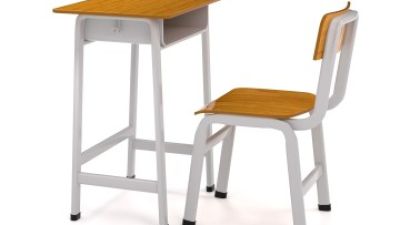
The GD-D13 Classic School Chair & Desk reflects the growing demand for practical, durable, and space-efficient classroom furniture. Market research insights indicate that schools and educational facilities increasingly value products that combine ergonomic design, reliable construction, easy maintenance, and adaptable use. Designed for daily learning environments, the GD-D13 offers a balanced seating and writing solution suitable for classrooms, training centers, and educational institutions seeking consistent quality from a China-based supplier.
Manufactured in China, the GD-D13 is produced with advanced technology and skilled workmanship to support stable performance and long-term use. Its sturdy structure is designed to withstand frequent movement and regular classroom activity, while the practical desk surface provides students with a comfortable area for writing, reading, and learning. Careful attention to production standards helps ensure dependable quality across different orders, making the model suitable for distributors, project contractors, and institutional buyers. With factory-based manufacturing experience, the product provides a reliable option for businesses looking to expand their school furniture range with a durable and competitively positioned chair-and-desk solution.
Its seat height should match children’s leg length and classroom activities. Both feet should rest near the floor. The fit matters.
Common school chair sizes range from about 310 to 460 millimeters. These figures are useful references, not universal answers. Measure local children before ordering.
A suitable chair supports writing, reading, drawing, and group work. It helps children sit comfortably without forcing a rigid posture. Movement should remain easy.
Rounded edges help reduce bumps during busy transitions. Stable feet prevent sliding on tile or sealed wood floors. Non-marking glides can reduce noise.
Moisture-resistant shells handle spills and stains. Coated metal frames tolerate repeated movement. Smooth surfaces make cleaning easier after paint, snacks, or outdoor dirt.
Adjustable or graded sizes can serve children with different heights and abilities. Lightweight chairs help children move independently. Excessive lightness may reduce stability.
Test sample chairs with real classroom routines. Children should lift, turn, sit, and move them. A showroom test is not enough.
Inspect chairs before each school term. Check loose joints, cracked shells, sharp edges, and worn glides. Keep repair records. Small faults grow.
No. Furniture cannot solve every educational inequality. A stable, comfortable seat may reduce distraction and support participation. Some choices may need revision.
Class sizes, floor surfaces, weather, and teaching styles vary widely. Breathable materials may help in warm regions. Local measurements should guide the final decision.
Elementary School Chairs play an important role in creating supportive and effective learning environments for young students around the world. Designed for developing bodies, they typically include child-appropriate dimensions, stable bases, smooth edges, and lightweight structures that make movement and classroom organization easier. Ergonomic features such as suitable seat heights, supportive backrests, and comfortable proportions can encourage healthy posture, reduce discomfort, and help children remain focused during lessons.
For global classrooms, chair design must also respond to different teaching styles, room layouts, climates, and educational needs. Durable, easy-to-clean materials and reliable safety standards help schools maintain a secure environment through daily use. At the same time, adaptable designs can serve diverse age groups and classroom settings. Choosing long-lasting, repairable, and resource-efficient chairs may reduce replacement costs and environmental impact, providing practical economic and sustainability benefits for schools worldwide.