Leave Your Message
- Phone
- E-mail
- Whatsapp
- WeChat

Picking out a School Chair And Desk for 2026 isn’t just about matching colors or chasing the lowest price. Remember, a classroom isn’t a showroom—it's a working environment. Students spend around six hours sitting, switching between writing and group activities, and lugging their books over uneven floors. If the furniture isn’t the right height, it can cause awkward knees, tense shoulders, and restless fidgeting—that’s the last thing you want.
Recently, experts from the World Health Organization, OECD education research, and UNESCO’s 2024 Global Education Monitoring Report have all highlighted how crucial healthy learning spaces are. They tie good environments to student participation, safety, and overall learning quality. And while the OECD PISA 2022 results remind us that good physical conditions support learning, they don’t replace good teaching practices. The tricky part? There’s no one-size-fits-all chair that magically works for every situation.
Peter Barrett, a Professor Emeritus at the University of Salford and a lead researcher on the HEAD Project, puts it simply: "The impact of the physical environment on learning is way bigger than we used to think." His research offers a pretty solid warning to everyone in charge of choosing School Furniture: yes, comfort matters and can boost classroom performance, but no piece of furniture alone will fix everything if planning is off.
So, what should you look for in a good school desk and chair for 2026? Well, things like seat height, desk clearance, lumbar support, rounded edges, sturdy frames, easy-to-clean surfaces, and adjustable features are key. And don’t just go by photos or catalogs—measure actual students. Test the furniture in lively, noisy classrooms. Talk to teachers about how students move around, storage needs, and maintenance. Something lightweight might be easier to move around, but it could also slip too much. A durable laminate could hold up well and resist scratches, but it might feel cold or a bit institutional.
The main idea? Make good choices, but also stay flexible. Changes and adjustments aren’t failures—they’re part of responsible decision-making for the best learning environment.
How to Choose School Chairs and Desks in 2026?
Understanding the Role of School Chairs and Desks in 2026
In 2026, school chairs and desks do more than hold books. They shape posture, movement, attention, and access to learning. After observing classrooms, I notice students work better when their feet rest comfortably and their elbows stay near desk height. Adjustable height matters. A desk that suits a tall student may strain a smaller child. Chair edges should support movement without pressing behind the knees. These details are easy to overlook during a quick furniture inspection.
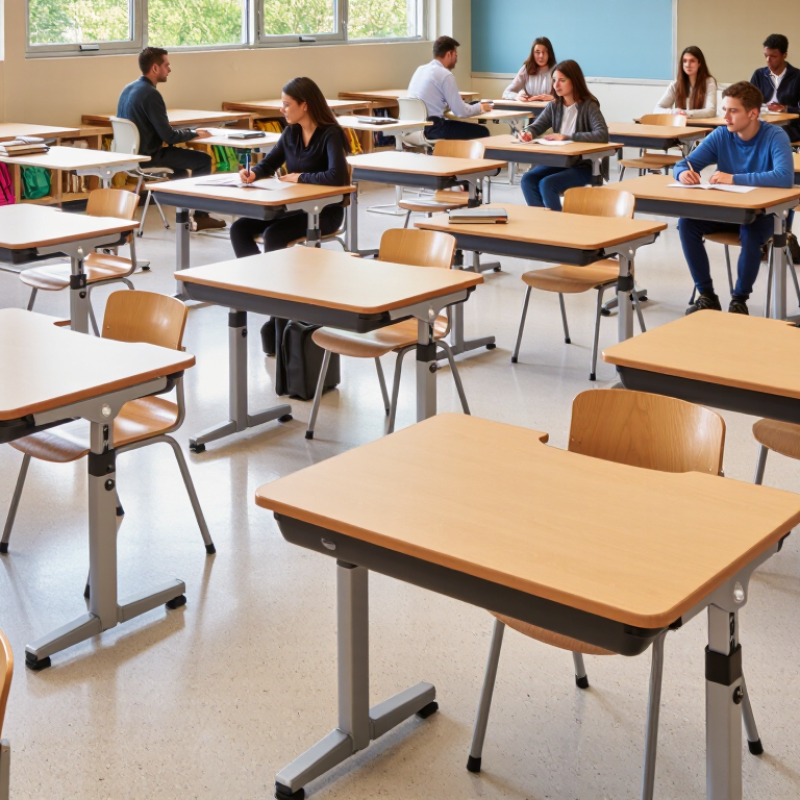
Modern classrooms change shape throughout the day. Students may listen, write, build models, use tablets, or discuss ideas in groups. Lightweight desks with stable frames can support these transitions without constant noise. Still, light does not mean fragile. Schools should check load ratings, rounded edges, cleanable surfaces, and repair access. Materials should tolerate spilled water, pencil marks, and repeated daily cleaning. That practical test often reveals more than a showroom photograph.
Good selection should include every learner, including children with different body sizes and mobility needs. Clear legroom and accessible layouts can improve participation. Teachers also need clear sightlines and space for quick support. Ergonomic guidance from qualified professionals can inform measurements, but local observation remains essential. I once favored compact furniture because it saved space. It also made group work cramped. That mistake changed my view: efficiency is not the same as usefulness. Procurement teams should invite feedback from students, teachers, and maintenance staff before approving a final design.
| Furniture Size | Nominal Chair Seat Height | Nominal Desk Height | Approximate User Group | Recommended Use and Selection Guidance |
|---|---|---|---|---|
| Size 0 | 260 mm (10.2 in) | 460 mm (18.1 in) | Early-years learners; approximately 3–5 years old | Suitable for smaller children when both feet can rest comfortably on the floor and the desk allows free movement of the knees. |
| Size 1 | 310 mm (12.2 in) | 530 mm (20.9 in) | Early primary learners; approximately 4–6 years old | Choose when the child can sit with the pelvis supported, shoulders relaxed, and forearms able to reach the work surface without lifting the shoulders. |
| Size 2 | 350 mm (13.8 in) | 590 mm (23.2 in) | Primary learners; approximately 6–8 years old | Useful for growing pupils who need more legroom than a Size 1 workstation provides. Verify fit using the actual student rather than age alone. |
| Size 3 | 380 mm (15.0 in) | 640 mm (25.2 in) | Primary learners; approximately 7–9 years old | Provides a higher work surface for children whose knees are crowded under smaller desks or whose feet sit flat at this seat height. |
| Size 4 | 430 mm (16.9 in) | 710 mm (28.0 in) | Older primary learners; approximately 9–11 years old | Check that the seat does not press behind the knees and that the desk height does not force the shoulders upward during writing or computer work. |
| Size 5 | 460 mm (18.1 in) | 760 mm (29.9 in) | Older primary or lower-secondary learners; approximately 10–13 years old | A common transition size for larger children. Adjustable products can extend useful service life as students grow. |
| Size 6 | 510 mm (20.1 in) | 820 mm (32.3 in) | Secondary learners; approximately 12–16 years old | Appropriate for taller students when the chair supports an upright posture and the desk provides adequate thigh clearance. |
| Size 7 | 550 mm (21.7 in) | 900 mm (35.4 in) | Tall adolescents and adults | Consider for senior students, laboratories, technical classrooms, or other settings requiring a higher work surface. Confirm compatibility with the classroom activity. |
| Selection rule for 2026: The dimensions above are nominal reference sizes from the EN 1729 furniture-size system. They are not a substitute for individual fitting. Before purchasing, check seat height, desk height, thigh clearance, foot support, posture, mobility needs, and the proportion of students who will use each workstation. For mixed-height classrooms, height-adjustable furniture or two adjacent size categories can improve fit and extend product life. | ||||
Measurements are shown in millimetres with inch conversions rounded to one decimal place. Approximate age groups are provided for planning only; student height and lower-leg length should take priority over age.
Customized ergonomic desks and chairs can make everyday workspaces safer, more comfortable, and easier to use. By adjusting seat height, back support, desktop position, and working angles, these products help users maintain a more natural posture and reduce unnecessary pressure on the back, shoulders, and wrists. A well-designed workstation also gives users enough room to move, change positions, and organize essential tools without excessive stretching or bending.
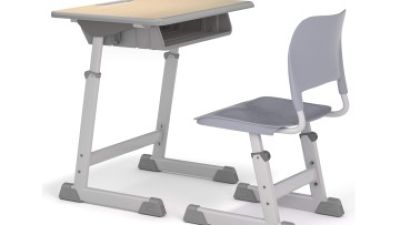
Product Code GD-G0 is a versatile option for homes, classrooms, offices, and activity areas. Its 390 × 390 mm seat provides a supportive sitting surface, while the 410 × 240 mm backboard helps promote stability and comfortable back positioning. The 600 × 400 mm desktop offers practical space for writing, reading, drawing, or using everyday equipment. With durable construction and functional dimensions, the design can be adapted to different user needs and workspace layouts. Manufactured in China and supplied directly from the factory, it is supported by dependable production capabilities and quality-focused suppliers.
They influence posture, movement, attention, and classroom access. Furniture now supports writing, group work, devices, and practical activities.
Measure student height, knee clearance, elbow position, and legroom. Feet should rest flat, with knees near a right angle. Measure twice.
No. Children grow unevenly, even within one class. Body measurements provide better guidance than age labels alone.
It should support the back without trapping movement. Chair edges should not press behind the knees. Feet should remain stable on the floor.
Adjustable furniture can follow student growth and changing needs. Staff must adjust it safely and quickly. Complicated controls may remain unused.
Movable desks help group discussions and model-building. Stable, quieter desks suit reading and focused writing. Lightweight frames should still remain sturdy.
Test surfaces against water spills, pencil marks, and repeated cleaning. Check rounded edges, load ratings, stability, and repair access. Showroom photos are not enough.
Provide clear legroom, accessible layouts, and enough turning space. Teachers also need unobstructed sightlines. Observe real movement, not only floor plans.
Yes. Students can reveal dangling feet, crowded bags, or scraping chairs. Teachers and maintenance staff can identify support and repair problems.
Do not choose compact furniture only to save space. Tight layouts may make group work uncomfortable. Efficiency is not always usefulness.
Choosing the right School Chair And Desk in 2026 requires more than comparing appearance and price. Schools should first consider students’ ages, body sizes, learning activities, and different physical needs. Furniture should support healthy posture through ergonomic shapes, suitable heights, rounded edges, stable structures, and adjustable features that can accommodate growth. Materials should be durable, easy to clean, and resistant to everyday classroom wear, while also allowing schools to control long-term maintenance costs.
A successful selection should also match the classroom layout, storage requirements, and teaching methods. Lightweight or modular furniture can make it easier to switch between individual study, group work, and creative activities. Schools should evaluate accessibility, technology integration, and health and safety standards, including ventilation, non-toxic finishes, and sufficient space for movement. Sustainability is equally important, so responsibly sourced, recyclable, and long-lasting materials can help reduce environmental impact while creating a comfortable, inclusive, and adaptable learning environment.