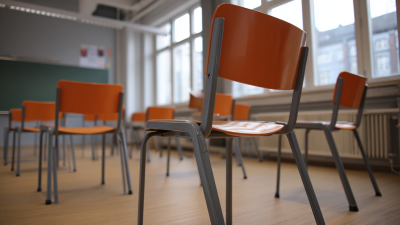
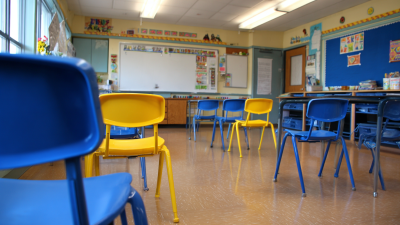
You know, primary School Chairs might look pretty basic at first glance, but their shape and height actually have a big impact on how kids sit, write, and get through their day at school. Like, if a chair's too high, their feet just dangle in the air—super awkward. And if it's too low, they end up hunching over with their shoulders basically touching the desk. It's crazy how much a simple chair can affect a kid's comfort and focus. So, there's this ergonomics researcher named Alan Hedge, and he's got a principle that just makes sense: furniture should adapt to the people using it, not the other way around. That's a huge deal in primary classrooms, you know? Kids grow like weeds, and the same room has to work for all sorts of stuff—reading, group projects, arts and crafts, you name it.
So, when you're picking out chairs for a primary school classroom, you've got a few common options to think about. There are the standard fixed-height ones, the adjustable ones, the stackable kind, and even some flexible seating choices. Each has its own perks, honestly. The fixed-height chairs are super easy to just line up and go—no fuss. Stackable ones? They're great when you want to clear the floor after class, no problem. Now, adjustable chairs, they're handy because they can grow with the kids or suit different needs, but you do have to keep an eye on those settings—they can get a bit finicky if you're not careful. Honestly, it's the little things that end up mattering the most. Like, you've got rounded edges so nobody bumps their head, stable legs so it doesn't wobble when you're working, easy-clean surfaces because kids are messy, and seat heights that actually fit those Classroom Desks—otherwise you'd be hunched over all day.
Honestly, there's no one-size-fits-all chair for every school. What works in a cozy library corner might feel totally wrong in a writing classroom or an art room. And even a chair that's well-designed on paper can be a real dud if it doesn't match the kid, the desk, or what they're doing all day. Yeah, that sounds obvious, right? But it's easy to forget when you're juggling budgets, storage space, and how long the thing will last. In the next sections, we'll compare different chair styles and give you some pointers on what to look for before you commit. Just be ready for some trade-offs—there's no perfect answer, but you can definitely find the right one for your space.
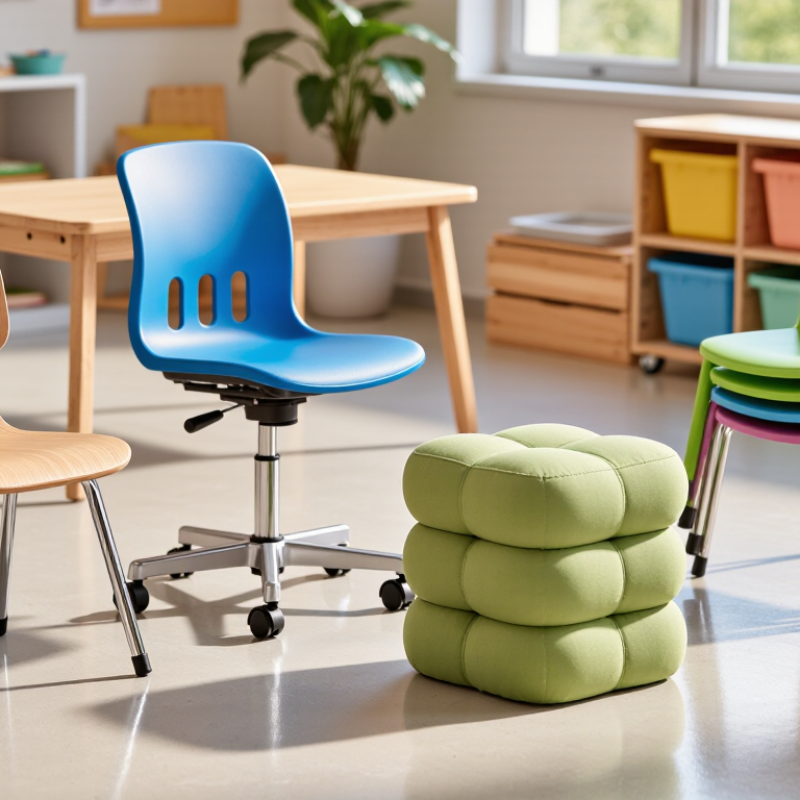
Primary school chairs are best classified by fit, construction, and classroom use. EN 1729-1:2015 assigns furniture size marks using pupil stature and seat dimensions. This makes height-based sizing more useful than choosing by grade alone. A child’s feet should rest flat, with knees comfortably bent and the seat edge clear of the back of the knees. Small details matter.
By construction, schools commonly compare fixed-size chairs with height-adjustable models. Fixed chairs are simple to arrange in rows, but one size may not fit every pupil. Adjustable chairs can serve changing classroom groups, though staff must reset them correctly. The CDC growth charts track children’s height by age, showing why age bands alone cannot predict an individual pupil’s fit. Bodies vary.
Classification should also consider the task: standard chairs suit desk work, while stackable models help rooms shift between lessons and activities. In a 1999 study of 76 pupils, Parcells, Stommel, and Hubbard compared children’s body measurements with school furniture dimensions and reported frequent mismatches. The study is a useful warning, not a universal estimate for every school. China Primary School Chairs should therefore be specified by measurable dimensions, stable construction, and the actual pupils who will use them. A label can mislead. Check the fit in the room.
Primary school chairs can be classified by size mark. This chart compares the nominal seat heights for EN 1729 size marks 1–4.
Nominal seat heights shown: size 1, 260 mm; size 2, 310 mm; size 3, 350 mm; size 4, 380 mm. Choose a chair size to suit the pupil’s body dimensions and desk height.
Standard classroom chairs are designed for everyday lessons, from reading quietly to writing at a shared desk. Most have a molded plastic or wooden seat, a supportive backrest, and a sturdy frame. Fixed-height chairs suit rooms with consistent desk heights, while adjustable models can accommodate a wider range of pupils. Stackable chairs are useful when classrooms need to be cleared for group activities.
A good fit matters more than appearance. When a child sits, their feet should rest on the floor or a footrest, with knees comfortably bent. The seat should support the thighs without pressing behind the knees. Backrests can encourage an upright position, but no chair keeps every child comfortable all day. Children grow at different rates, and classroom furniture does not always match them perfectly. Check chairs for loose joints, sharp edges, and wobbling legs as part of routine maintenance.
Tips: Match chair height to desk height, and let pupils sit in the chairs before buying a full set. Check the fit again as children grow. Small adjustments help.
Some classrooms benefit from lightweight chairs that pupils can move safely. Others need heavier frames for frequent daily use. Choose materials that are easy to wipe clean, and consider noise on hard floors. Felt pads may reduce scraping, though they can wear down and need replacing. Comfort is practical, not fancy.
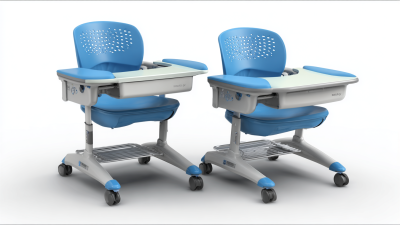
Adjustable chairs can keep pace with pupils whose legs seem longer each term. A well-fitted seat lets a child sit with feet flat on the floor and knees near a right angle. The seat edge should not press into the backs of the knees. Small changes matter. Check chair height alongside desk height; raising one without considering the other can leave shoulders hunched during writing.
Look for simple, secure adjustments that staff can make without tools. A clear height scale helps several adults set chairs consistently. For younger pupils, a stable footrest may help when the chair cannot be lowered enough. Test the adjustment with the child seated, not just by comparing measurements. Custom Primary School Chairs can be specified for a range of pupil heights, but flexibility alone does not guarantee a comfortable fit. Recheck settings as children grow. It is easy to overlook this during a busy school term.
Tips: Ask pupils to sit back and write for a few minutes. Check that their feet stay supported and elbows rest comfortably near desk height. If a chair wobbles, slips, or feels awkward to adjust, remove it from use until it is checked. A quick fit check is useful, though it cannot replace regular review.
Primary school chairs may be fixed-height, adjustable, or grouped by size. For posture and comfort, fit matters more than a chair’s label. EN 1729-1:2015, the European standard for educational furniture, defines eight size marks for chairs and tables. These size categories help schools match furniture to pupils’ body height rather than relying on age alone. A child’s feet should rest flat, with knees close to a right angle and the back supported. Small mismatches add up during a long lesson. A chair that is too deep can press behind the knees; one that is too high may leave feet dangling.
Tips: Check the fit while the pupil is seated. Look for relaxed shoulders, supported feet, and room behind the knees. Recheck after growth spurts. Children do not grow to a schedule.
When comparing Wholesale Primary School Chairs, ask for seat-height and seat-depth measurements, plus the intended pupil height range. Adjustable chairs can serve mixed-size classes, but adjustment only helps when staff use it correctly. That part is easy to overlook. A brief classroom fit check can reveal more than a catalogue photo. Still, posture is not solved by furniture alone: pupils need chances to stand, stretch, and change position. Schools should treat ergonomic guidance as a practical starting point, not a promise that one chair will suit every child.
Stackable chairs help classrooms adapt as lessons change. A teacher can clear a reading corner, arrange small discussion groups, or open floor space for a movement activity. When class ends, chairs nest in a neat stack beside the wall. That matters. Less clutter leaves children more room to move safely.
For primary pupils, chair weight and size are practical considerations. Children should be able to sit with feet near the floor and move their chairs without straining. Rounded edges and stable legs can help reduce bumps and wobbling during busy transitions. High-Quality Primary School Chairs should also be easy to wipe, since paint, snack crumbs, and pencil marks are part of ordinary school life. Not always. A chair that stacks well may still feel uncomfortable after a long lesson, so teachers should check the seat and backrest before choosing a full set. Stack height matters, too: tall piles can be awkward to handle and may need a designated storage area. A simple trial with pupils can reveal issues that a product description misses.
Inclusive seating should respond to a pupil’s needs, not just a diagnosis. UNICEF’s 2021 report estimates that 240 million children worldwide live with disabilities. That figure is not a measure of chair demand. It does show why classrooms need flexible options. Some pupils need stable trunk support; others need adjustable seat height or a footrest. Comfort is not uniform.
Specialist chairs may include height-adjustable models, supportive seats with lateral supports, and chairs with tilt or recline functions. These features can help pupils maintain a workable posture and reach desks more comfortably. A mobile chair may suit one activity, while a more supportive chair may be better for focused desk work. WHO and UNICEF’s 2022 Global Report on Assistive Technology estimates that 2.5 billion people need one or more assistive products. Nearly one billion lack access. This global figure covers many products, not chairs alone.
In practice, teachers, families, and relevant seating professionals can observe how a pupil sits, moves, and uses classroom furniture. A short trial can reveal pressure points, poor desk access, or feet left dangling. Small details matter. Adjustable parts are useful only when staff can set them correctly and check them over time. It is easy to overlook that. A chair that works in one classroom may not fit another desk or daily routine.
Use pupil height and seat dimensions, not grade alone. Feet should rest flat, knees should bend comfortably, and the seat edge should clear the knees.
It assigns furniture size marks using pupil stature and seat dimensions. Treat the marks as a guide, then check the child in the actual chair.
Fixed chairs are easy to arrange in rows, but one size may not fit everyone. Adjustable chairs suit changing groups, if staff reset them correctly.
They can clear space for reading corners, group work, or movement activities. Less clutter leaves children more room to move. That matters.
Check seat and backrest comfort, chair weight, stable legs, and rounded edges. Tall stacks can be awkward, so plan a storage spot.
Depending on the pupil, useful features may include adjustable height, a footrest, lateral supports, or tilt and recline functions. Needs differ.
Observe how the pupil sits, moves, and reaches the desk. A short trial may reveal pressure points or dangling feet.
No. A 1999 study of 76 pupils found frequent furniture mismatches, but it is not a universal estimate. A tidy label can still mislead.
Not always. A chair that stacks neatly may still feel uncomfortable during a long lesson, and desk access can vary between rooms.
Primary School Chairs come in several types, each designed to support a different classroom activity or pupil need. Standard classroom chairs provide practical, dependable seating for everyday lessons, while adjustable chairs can be adapted as children grow. Ergonomic designs focus on comfortable support and posture during periods of sitting, helping pupils stay settled as they read, write, and learn.
Classrooms also benefit from stackable chairs, which can be moved or stored easily when rooms need to be rearranged for group work or other activities. Specialist chairs can offer additional support for pupils with particular comfort, mobility, or accessibility needs. Choosing among these options means considering pupils’ ages, classroom routines, available space, and individual requirements. The right mix can help create a more comfortable and flexible learning environment.